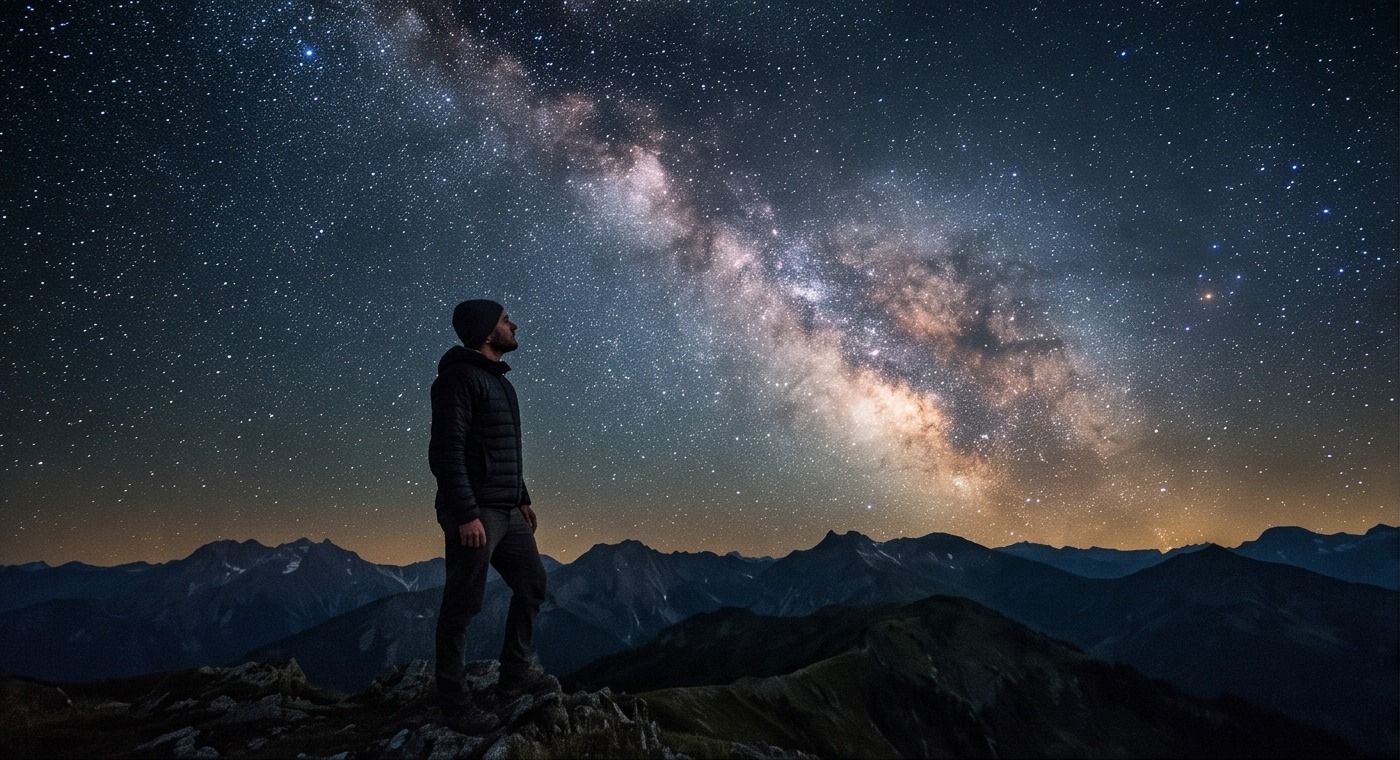
The Arena of Dreams
Confessions of the sole observer
“What if the world is not a place, but a question being asked of you?”
I.
The dream that does not know it is a dream
Every night, you step into a world that feels complete. The dream has streets and faces, fear and desire, logic that holds while you are inside it. You run from shadows that cannot touch you. You weep over losses that never happened. You speak with people who have no existence apart from your own sleeping mind. And never, not once while the dream lasts, do you stop and say: this is not real.
The dream does not announce itself. That is its genius. It needs no walls to imprison you, because it makes you forget that anything lies outside.
Only upon waking does the truth arrive, sudden and absolute. The city dissolves. The pursuer evaporates. The beloved face you held a moment ago is revealed as nothing more than a flicker of neurons, a costume worn by your own imagination. And you lie there in the dark, heart still racing, and you whisper: how could I have believed it?
Now consider the most dangerous question a human mind can ask:
What if this, too, is that?
What if the waking world, with its gravity and taxes and sunsets and funerals, is simply a dream of a higher order? A dream so vast, so detailed, so relentlessly consistent, that it has never once given you reason to doubt it? What if you have not woken up in your entire life, but have only been dreaming more deeply?
II.
The observer and the objects
In a dream there is only one true participant: the dreamer. Everything else, however vivid, however convincing, is scenery. The friend who comforts you, the stranger who threatens you, the crowd that cheers: none of them have an inner life. None of them go home when the dream ends. They are objects wearing the mask of subjects.
This philosophy proposes the same arrangement for the world we call real.
There is the Observer, the one who sees, who feels, who suffers and wonders. And then there is everything else: parents and siblings, lovers and rivals, politicians and prophets, cities and oceans, mountains and microbes, galaxies spinning in silence. All of it is arrangement. All of it is stage machinery. All of it follows a script, a set of rules, a storyline written for one purpose alone.

Cottages, cattle, a bird on a chimney. Every detail in its place, as if set for an audience of one.
To test the Observer.
This is a terrifying thought and a strangely intimate one. Terrifying, because it strips the world of every companion. Intimate, because it means that nothing in existence is accidental. The rain that fell on the day of your grief did not fall by chance. The stranger who smiled at you when you had lost hope was not a coincidence. Every event is addressed to you, like a letter in a language you have not yet learned to read.
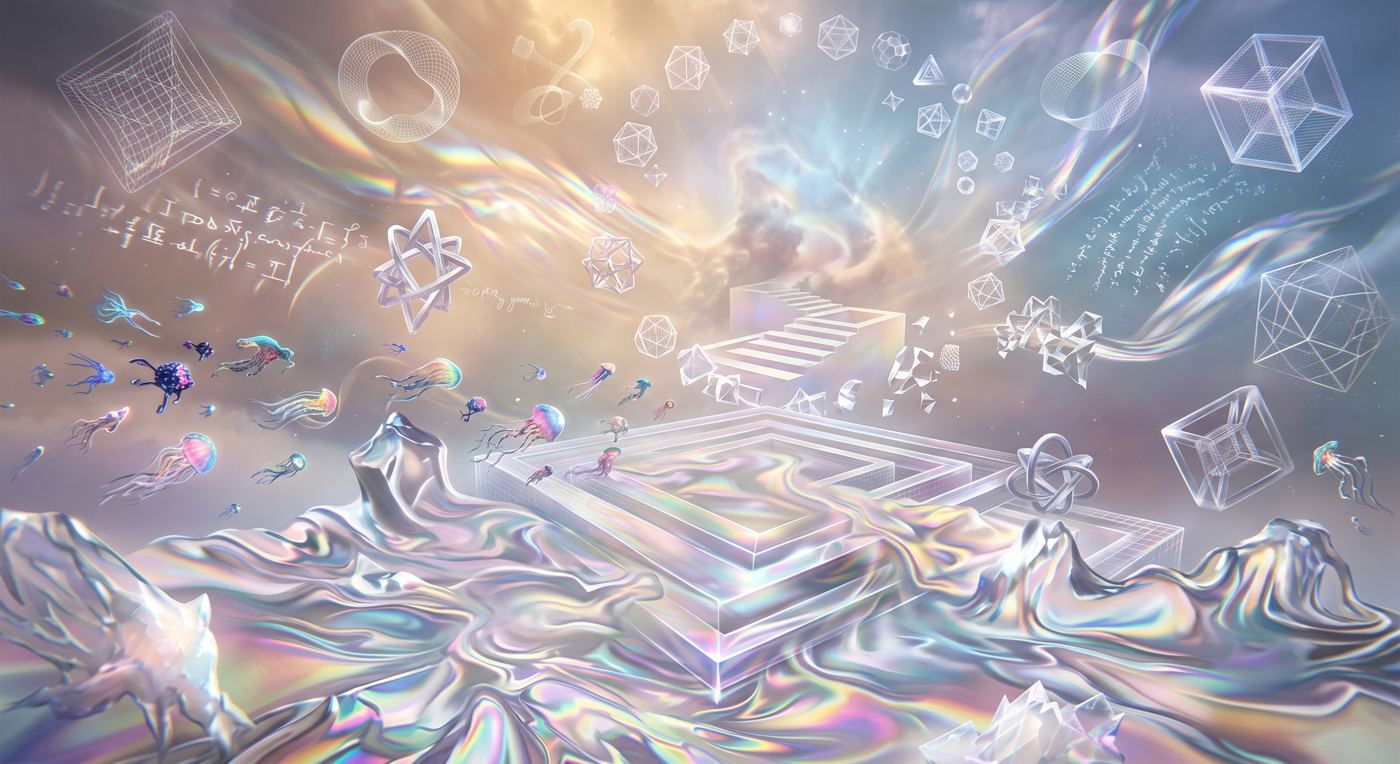
A reality with its own dimensions, its own rules, its own forms.
III.
Beyond the four dimensions
If this world is a dream, then where is the dreamer sleeping?
Here the philosophy reaches beyond the limits of imagination itself. The real world, the waking world, is not simply another planet or a bigger room. It is a reality governed by different dimensions, different laws, different forms. The four-dimensional fabric of space and time that seems so fundamental to us may be nothing more than the local physics of the arena, a set of rules built for this particular game.
In the real world, you may not have a body like this one. You may not have a body at all, in any sense the word could carry. You may not exist in time, or at a place. The beings there, including your true self, would be incomprehensible to a mind shaped by this world, because this mind can only think in the shapes this world has given it.
Think of a character in a painting trying to imagine the painter. The character knows only two dimensions, color and line. It might imagine the painter as a larger figure, a more beautiful figure, a figure made of brighter paint. But it could never imagine depth, breath, a heartbeat, a hand holding a brush. The very categories are missing.
So it is with us. When we try to picture the real world, we paint it with the colors of this one: light, space, form, sequence. And every picture fails, not because the real world is too far away, but because it is too other.

The arena is merciful. It gives you a body that is small, weak, and dependent.
IV.
The small body
Why, then, do we arrive here as infants?
Consider it from the Observer's perspective. You come from a reality so utterly different that nothing here makes sense. Gravity is alien. Space is alien. Time, that relentless forward current, is alien. If you were given full power in such a place, you would destroy yourself in ignorance, like someone handed the controls of an aircraft before they know what the sky is.
So the arena is merciful. It gives you a body that is small, weak, and dependent. You cannot walk. You cannot speak. You can barely see. You are wrapped in helplessness, and that helplessness is protection. You are allowed to learn the rules slowly, one fall at a time, one word at a time, one burn at a time.
And as understanding grows, so does capability. The body lengthens, strengthens, sharpens. The hands learn to build, the tongue learns to argue, the mind learns to calculate the orbits of planets. Growth, in this view, is not biology. It is the arena calibrating itself to the Observer's comprehension. Power is released only as fast as wisdom can hold it.

Power is released only as fast as wisdom can hold it.
Childhood is not the beginning of life. It is the tutorial.

V.
The noise
If the real world is our true home, why do we remember nothing of it?
Because this world is loud.
It floods every sense without pause. Color, sound, hunger, touch, music, argument, ambition, romance, news, notifications, the endless churn of things to want and things to fear. There is always something new to discover, something to chase, something to solve. The arena is a festival that never closes, and its lights are so bright that they blind you to the stars behind them.

A festival that never closes.
The senses of the real world are still there, perhaps, faint as a whisper beneath a thunderstorm. But who can hear a whisper in a thunderstorm? The noise is not a flaw in the design. The noise is the design. It holds you here. It keeps the dream from breaking.
And the most astonishing part: you love it. You do not want the noise to stop. You are fascinated by this strange world, its puzzles and pleasures, its heartbreaks and triumphs. Your curiosity itself is the anchor that keeps you from waking.
VI.
Sleep: the thin veil
Every night, the arena loosens its grip.
The body lies still. The senses dim. The noise fades to a hum. And in that surrender, something shifts. You drift, not all the way out, but closer to the edge. Sleep, in this philosophy, is not rest. It is a partial return. It is the Observer pressing a face against the glass that separates the two worlds.
Perhaps this is why sleep feels so necessary and so mysterious. Perhaps this is why we wake some mornings with a sense of having been somewhere vast, with a meaning that dissolves the instant we try to hold it in words. Perhaps dreams-within-the-dream are the static of that other frequency, bleeding through.
For beyond that veil, the rules of the arena do not hold. The real world lies outside this world’s space and outside its time. There, past, present and future are not a road walked one step at a time. They are a single landscape, seen all at once. Before and after mean nothing.
In sleep, we do not only remember the past. We remember the future.
We glimpse events that have not happened here yet, but will. We brush against moments still waiting further down the road. In the real world, they are as solid as yesterday. But when we are pulled back into the arena, they arrive without an anchor, and they make no sense.
Because memory in this world is not storage. It is connection. We remember by joining each new impression to the dots of our past experience. Where there are no dots, nothing can be joined, and nothing is kept.
This is why almost nothing survives from our earliest childhood. The newborn Observer has too few experiences of this world to hang its memories on. The dots are scattered and sparse, and the picture never forms. The future meets the same fate. What we saw beyond the veil has no past here to cling to, so it leaves only a few strange impressions, fragments that seem to mean nothing, and often even those dissolve within moments of waking.
Watch closely what happens in that moment. For a breath, as your eyes open, everything you saw still makes perfect sense. Then the context slips away. The meaning drains out like water through fingers. What felt profound a second ago begins to seem silly, absurd, nonsensical. And you laugh at it. Just a dream, you say.
Never realizing that you have just fallen back asleep. That the laughter itself is the sound of the dream closing over you again.
You approach the border every night. And every morning, the arena calls you back.
VII.
The refusal to wake
Here is the paradox at the heart of it all.
To wake up completely is to leave this world entirely. What we call death, seen from inside the arena, is the collapse of everything: the body, the name, the story. But seen from outside, it is simply opening your eyes.
And yet, you fight it with everything you have.
You flinch from danger. You eat when hungry. You run from fire. You take medicine, wear seatbelts, look both ways before crossing. The instinct to survive is fierce, ancient, relentless. It seems to be woven into the arena's deepest code: stay. Do not leave early. The test is not finished.

Everything in us fights to stay.
This is important, and it may be the most important line in this whole philosophy: the exam is not passed by fleeing the exam hall. Whatever the test is measuring, it can only be measured while you are here, living, choosing, acting. The survival instinct is not a cage. It is the arena's way of insisting that your time here matters, that every day of it counts, that the story must be lived to its natural final page.
The awakening will come. It comes for every Observer. But it comes in its own time, not ours.
VIII.
What is being tested?
If this entire universe is an examination, then the most urgent question is not whether it is real. It is: what is the test measuring?
It cannot be wealth. Wealth vanishes on waking, like dream gold that turns to leaves in your hand.

Dream gold that turns to leaves in your hand.
It cannot be fame. The crowds were scenery.
It cannot be knowledge of gravity or galaxies. Those were local rules, irrelevant in the real world's alien physics.
What survives the awakening? Only one thing can: the Observer itself, and whatever the Observer has become.
So perhaps the test is about character. Perhaps it measures what you do with power when you believe no one is watching. Whether you are kind to beings you suspect are "only objects." Whether you are honest when lying is easy. Whether you are brave, patient, generous, humble, curious. Whether you can hold a whole world in your hands and not become cruel.


Two ways to meet the beings of the arena.
Consider this: if everyone around you were only a test, then how you treat them is the test itself. The mother who raised you, the stranger you ignored, the enemy you could have forgiven, the child who looked to you for safety. Each one is a question. Each one says: show me who you are.

Each one is a question.
In that light, this philosophy does not make the world meaningless. It makes every single moment unbearably meaningful.

One day it will happen.
IX.
The awakening
One day it will happen.
The noise will stop. The colors will drain. The body will fall away like a garment slipping from the shoulders. Space will fold. Time will cease to flow and simply be. And the Observer will open its eyes in a reality it has not seen since before its first breath in this world.
In that moment, everything vanishes.
Parents, siblings, spouse, children. Friends and foes. Politicians and nations. Cities, buildings, parks, offices, companies. Cars and planes. Mountains, rivers, air. Animals and plants. Clouds, rain, seasons. Sky, stars, sun, moon, galaxies. Food and filth. Health and illness. Pain. Gravity, force, light, darkness. Space. Time.
All of it: gone, like breath on a cold window.
And you will remember. You will remember that you forgot. You will remember how completely you believed, how seriously you took every argument, every insult, every fear, every deadline. You will remember the nights you lay awake over things that were never there.
And then, the verdict you pass on yourself.


Laughter or tears: the verdict you pass on yourself.
Perhaps you will laugh: the deep, freed laughter of someone who played the game well, who loved generously in a world of shadows, who faced illusory terrors with real courage, who was gentle when harshness was easy.
Or perhaps you will cry: for the kindness you withheld, the time you wasted on hatred, the moments you treated the arena's beings as if they did not matter, only to realize that how you treated them was the only thing that ever mattered.

Epilogue
The sleeper's choice
This philosophy is ancient in its bones. Zhuangzi dreamed he was a butterfly and woke unsure whether he was a man who had dreamed of being a butterfly, or a butterfly now dreaming it was a man. The Hindu sages spoke of Maya, the grand illusion veiling the real. Plato imagined prisoners in a cave mistaking shadows for the world. Descartes wondered whether a deceiving spirit had fabricated everything he perceived. And in our own age, thinkers ask whether reality might be a simulation, running on machinery we will never see.
Each generation rediscovers the same vertigo: the world may not be what it seems.
But here is the final, quiet twist. Whether this world is a dream or not, you cannot live as if it is not happening to you. The pain is felt. The love is felt. The choice is yours, every hour, whether the scenery is real or painted.
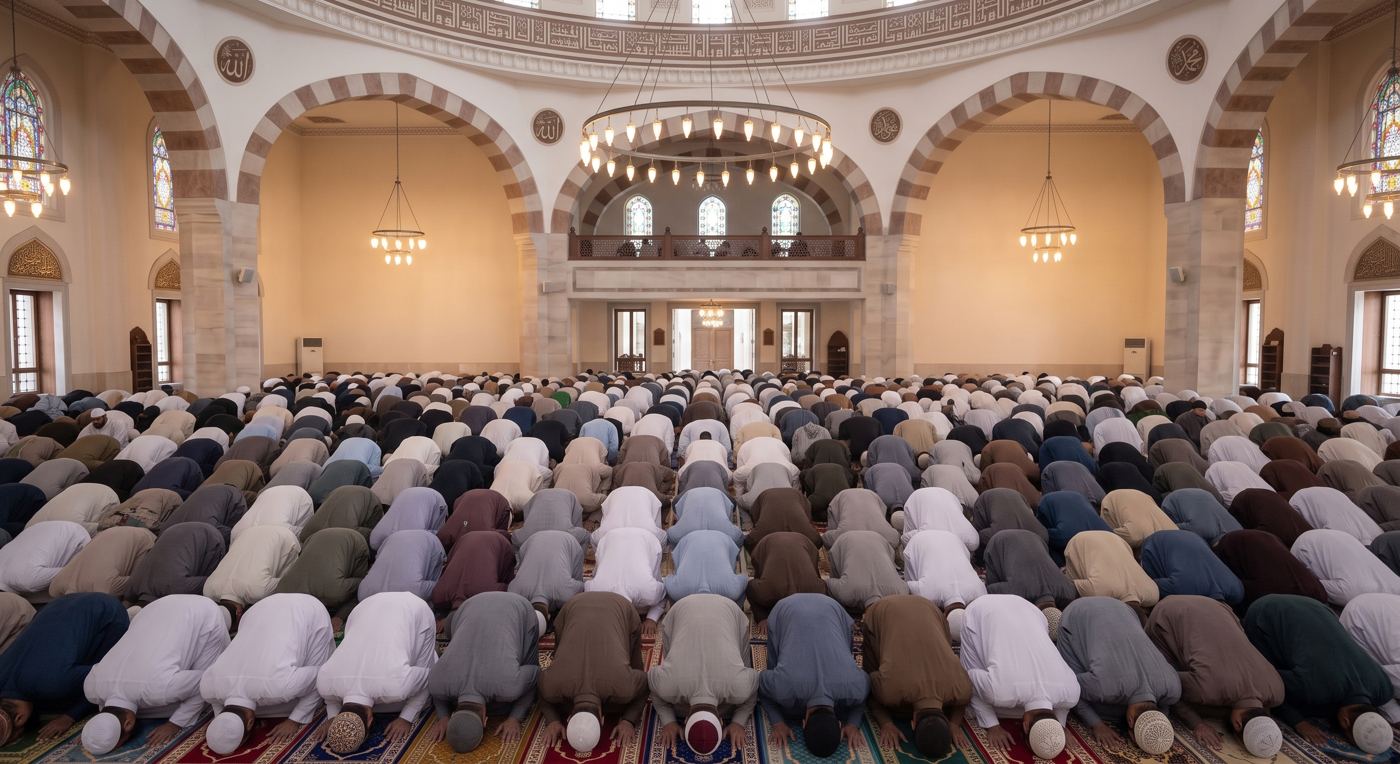
Many traditions have long taught that this life itself is a test.
So live as if you are being tested, because perhaps you are. Treat every "object" as if it might be a soul, because the test may be precisely that. Stay in the arena, and play it with all the wisdom and tenderness you can gather.
And when the awakening comes, in its own time, may you open your eyes laughing.
About the author
Muhammad Mehdi Hussain is a Pakistani deep-tech entrepreneur, space technologist and astronomer based in Karachi, with more than two decades spent building technology companies and now engineering solutions for human habitation on Mars. He co-founded the Karachi Astronomers Society, built Pakistan’s first fully automated privately owned domed observatory, and has traced over a hundred mud volcanoes across Balochistan, earning the nickname “Mud Volcano Man of Pakistan.”
~